Back to the febrile neutropenia management series. Two questions frequently arise during the course of management, particularly with regards to febrile neutropenia (FN) in patients with haematological malignancies where the duration of neutropenia may be very long: In the presence of neutropenia, can there be “de-escalation” of antibiotic therapy if a sensitive bacterium is cultured […]
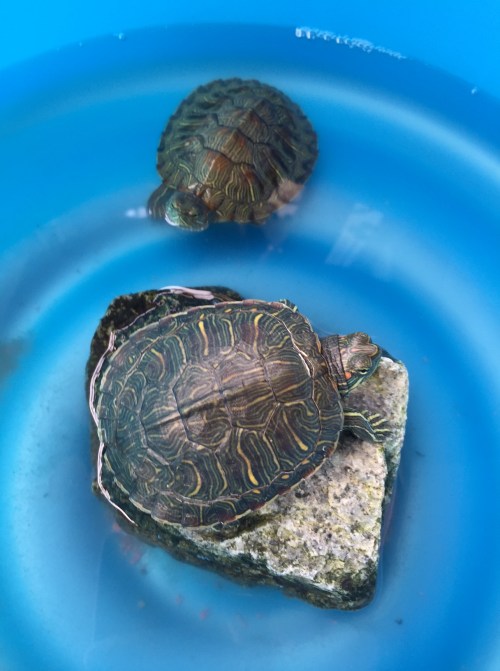
Almost two weeks ago, Channel News Asia reported that terrapins may harbour non-typhoidal Salmonella bacteria. Non-typhoidal Salmonella, as the term suggests, are Salmonella species other than the exclusively human-adapted Salmonella spp. that cause enteric (i.e. typhoid and paratyphoid) fever. The former tend to cause gastroenteritis for the large part, although they may also cause severe infections in immunocompromised persons, including […]
We move on from outpatient management of febrile neutropenia – which is backed by good science and is conceptually attractive but not straightforward to implement – to inpatient management of “high risk” (by MASCC or other criteria) febrile neutropenia, specifically in the area of antibiotic therapy. Here, there are a bewildering number of options (basically, […]
After the rates of Pseudomonas aeruginosa infections fell in patients with febrile neutropenia, it became tacit knowledge to many oncologists (and haematologists) that the majority of patients with febrile neutropenia – especially those with solid organ cancers – recovered uneventfully. How could this knowledge be codified into a predictive model that could reliably separate out patients at […]
Chemotherapy-induced febrile neutropenia is a life-threatening condition that remains common during the therapy of haematological malignancies, but has become far rarer for patients with solid tumours because of the increased use of targeted therapy. It is traditionally defined as a single oral temperature of 38.3ºC or a temperature of greater than 38.0ºC sustained for more […]
The World Economic Forum (WEF) at Davos is probably the largest and most important networking event in the world, regularly attended by political and business leaders from across the globe. For 11 years now, the WEF has published an annual list of what its experts perceive to be the most important global risks and how these […]
A young woman was recently diagnosed with Stage II breast cancer. Post-resection, she was started on adjuvant 3-weekly docetaxol, doxorubicin and cyclophosphamide. Ten days after the second cycle, she developed fever and headache, with temperature of up to 38.5 degrees Celsius. She had nausea, but no vomiting or diarrhoea. There was no contact or other significant history of […]
The SG50 infectious diseases project “Overcoming Infectious Diseases and Singapore: Past, Present and Future” was officially launched at the end of last year at the Tan Tock Seng Hospital (TTSH) Theatrette. The occasion was graced by the new Minister of State for the Ministries of Communications & Information, and Health, as well as the TTSH CEO, […]
It is the last day of 2015, and therefore timely to reflect back on the significant events of the year. Oftentimes, the true impact of certain events are not known until much later in the future, and media hype (or lack thereof) creates its own bias which is hard to overcome. Here is a personal […]
Dr Moses Yu passed away yesterday morning, 30th December 2015, at the age of 82 years. He was the first locally trained microbiologist in Singapore, heading the Department of Pathology at the Ministry of Health Singapore (the Department was only transferred to Singapore General Hospital in 1989 – a move that met with mixed reception. […]

